Kakeibo and the Missing Category in American Personal Finance
In 1904, Japanese journalist Motoko Hani introduced a household budgeting method called kakeibo, a simple system for tracking household spending.
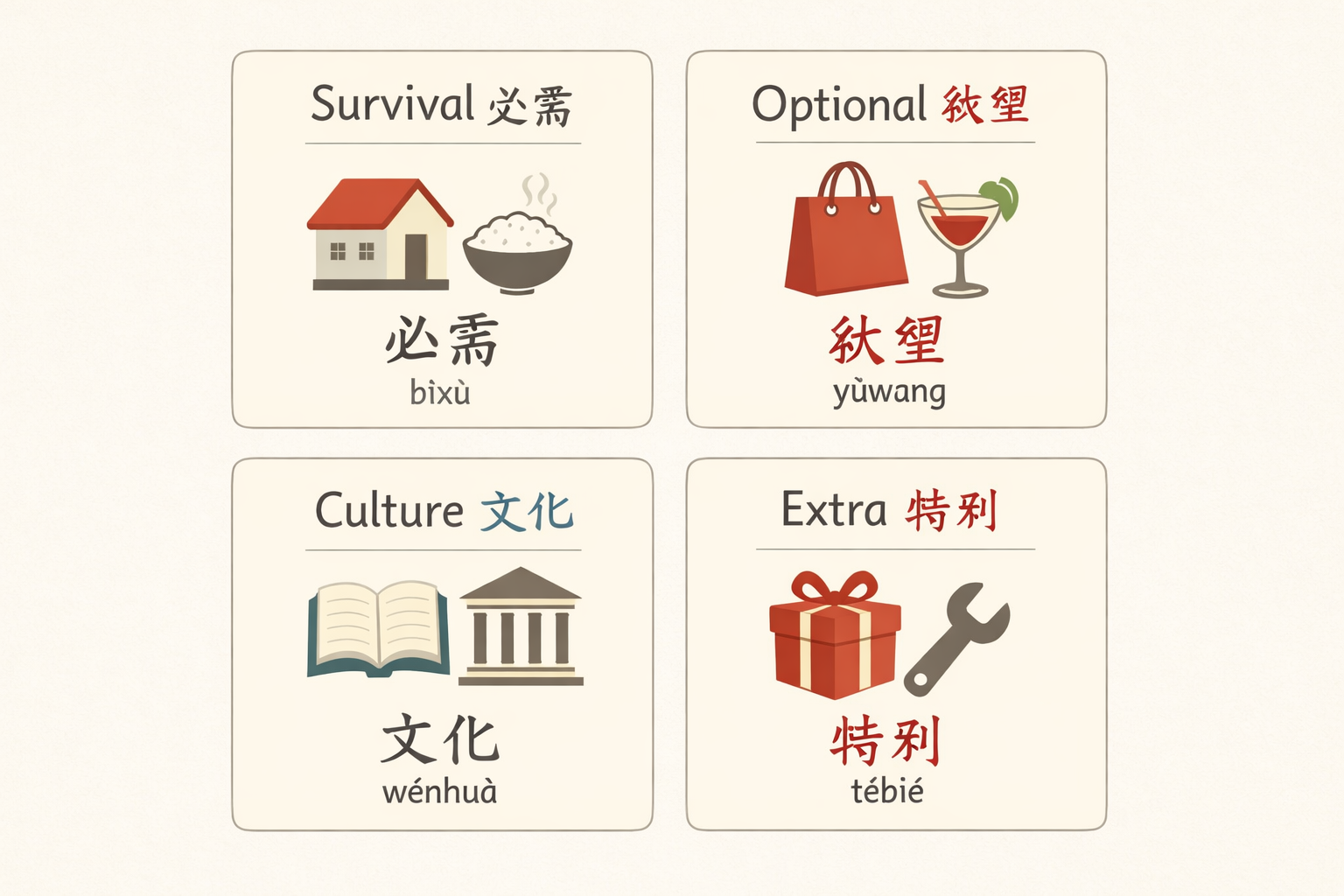
The framework divides expenses into four categories:
Survival (必需 / bìxū) – housing, food, utilities, transportation
Optional (欲望 / yùwàng) – restaurants, shopping, entertainment
Culture (文化 / wénhuà) – books, education, museums, learning
Extra (特别 / tèbié) – gifts, repairs, medical bills, unexpected costs
The surprising category is culture.
In most American budgeting systems, discretionary spending is lumped together. Buying a book, paying for a course, going to a museum, ordering takeout, and buying new clothes all fall under the same “wants” bucket. Kakeibo separates them.
The logic is simple but profound: not all discretionary spending is equal. Some spending compounds. Books, learning, and cultural exposure build human capital over time. Treating them as mere consumption subtly discourages investment in the self.
By giving culture its own category, the budgeting system itself nudges households to spend more intentionally. In my view, this small design choice is remarkably elegant. A simple change in how spending categories are defined can quietly steer behavior toward activities that compound intellectually, socially, and emotionally over time.
There may also be broader effects on happiness and society. Many cultural activities generate benefits that extend beyond the individual making the purchase. Economists would call these positive externalities.
When people read books, attend lectures, visit museums, or pursue education, the returns are not purely private. A more educated and culturally engaged population tends to produce richer public discourse, stronger civic institutions, and higher levels of social trust. These benefits are difficult to quantify but they matter enormously for long term societal wellbeing.
There is also a more personal dimension. Cultural activities frequently involve shared experiences. Museums, concerts, classes, and lectures often create opportunities for conversation and community. Even solitary activities like reading can lead to discussion and intellectual exchange.
In contrast, many forms of discretionary consumption are relatively isolated. Buying additional material goods or upgrading personal luxuries often produces shorter lived satisfaction and fewer social connections.
Psychologists frequently observe that experiential and intellectual activities generate more durable happiness than purely material consumption.
Seen through this lens, the kakeibo framework quietly nudges households toward spending categories that are more likely to generate both personal fulfillment and social benefits. By separating culture from ordinary discretionary spending, it elevates activities that strengthen both the individual and the broader community.
In that sense, the ledger is not just tracking money. It is shaping how households think about what constitutes a well lived life.